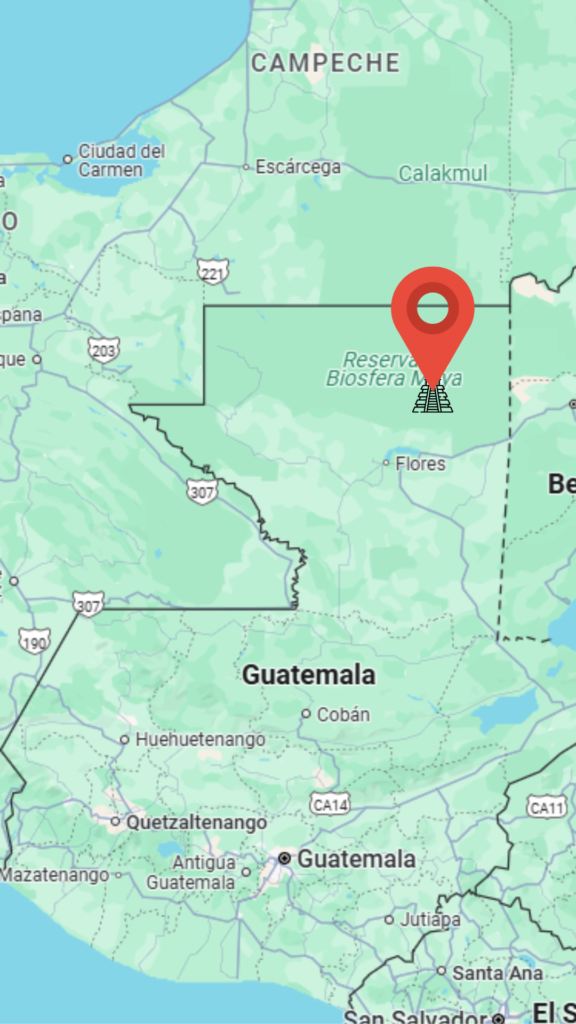
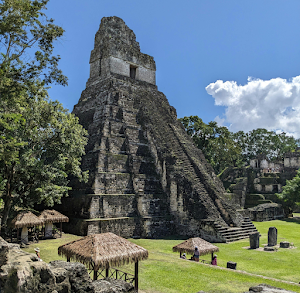
Tikal, located in the Petén region of northern Guatemala, is one of the largest and most spectacular ancient Maya cities ever discovered. Designated as a UNESCO World Heritage Site, Tikal is not only a testament to the architectural and engineering prowess of the Maya civilization but also a biodiversity hotspot surrounded by the dense Tikal National Park rainforest. With its towering temples, sprawling plazas, and rich history, Tikal offers an unforgettable journey into the heart of the Maya world.
While Tikal is located in Guatemala, it is a popular destination for visitors to Belize due to its proximity and cultural connections with the ancient cities of Belize, such as Caracol and Xunantunich.
Things to Do at Tikal
Climb the Iconic Temples: Tikal’s massive Temple I (Temple of the Great Jaguar) and Temple II (Temple of the Masks) dominate the Grand Plaza. Visitors can also climb Temple IV, which rises over 212 feet (65 meters) and offers breathtaking views of the rainforest canopy with other temples peeking above the trees.
Experience the Wildlife: Tikal is teeming with wildlife. Visitors often spot howler and spider monkeys, toucans, parrots, and coatimundis as they explore the ruins.
Marvel at the Stargazing Legacy: Tikal was a center for astronomy, with its temples aligned to mark the solstices and equinoxes. Sunrise and sunset tours offer a magical way to experience this celestial connection.
Hike Through Tikal National Park: The dense jungle trails provide a chance to immerse yourself in the natural beauty of the Petén region while uncovering smaller, lesser-known ruins.
The Journey to Tikal
From Belize City: The journey to Tikal begins with a drive to the Belize-Guatemala border, followed by a scenic drive through Guatemala’s Petén region. The total travel time is about 4–5 hours.
From San Ignacio, Belize: A shorter and more convenient route, the trip from San Ignacio to Tikal takes about 2.5–3 hours, making it an ideal day trip or overnight excursion.
From Flores, Guatemala: For those already in Guatemala, Tikal is only about 1.5 hours by car from the town of Flores, a popular base for visitors.
History of Tikal
Tikal was one of the most powerful city-states in the ancient Maya world, thriving during the Classic Period (200–900 AD). Archaeological evidence suggests that Tikal’s origins date back to around 900 BC, and it rose to prominence by 200 AD, becoming a dominant political, cultural, and economic force.
At its height, Tikal supported a population of over 100,000 people and maintained extensive trade networks with other Maya cities, such as Calakmul, Caracol, Copán, and Palenque. The city was known for its massive pyramids, elaborate stelae, and advanced astronomical knowledge.
Tikal’s decline began around 900 AD, likely due to a combination of warfare, resource depletion, and environmental factors. By the time of the Spanish conquest, Tikal had been abandoned for centuries, hidden beneath the jungle canopy until its rediscovery in the 19th century.
Location to your destination
Nearby Temples and Attractions
If you’re visiting Tikal, consider exploring other nearby sites and attractions to enrich your journey:
We got shuttle service from Belize airport to Guatemala and back to Belize airport. Extremely happy with the service, all of the drivers were friendly and kind. The service was exceptional. Jasmin was the coordinator and she was awsome and helpful.
If you get the service with them you will love it.
The best tour ever. From all the assistance Yasmin provided at booking to the actual activities top tier. We enjoyed the Mayan Ruins, ATV & Cave tubing. Our guide was a wealth of information regarding the Mayan Culture and Belizean culture. Warm, friendly and professional company.
We arranged multiple pickups and drop offs as well as a trip into Mexico to see Chichen Itza during a weeklong visit to Belize. The drivers were very good, on time and helpful. When in Belize there was constant communication and updates regarding our times etc. and our goals were met and our trip was great. Thanks to everyone at Nelson Maya Adventures for a great vacation.
Private Transfer from Belize City (Water Taxi Terminal) to Belmopan
⭐⭐⭐⭐⭐
Our private transfer from Belize City to Belmopan was absolutely smooth and comfortable. Upon arrival at the Water Taxi Terminal, we were warmly greeted.
The vehicle was clean, air-conditioned and very comfortable—an excellent relief after the boat ride. Our driver was not only punctual but also extremely friendly and knowledgeable. He shared interesting insights about Belize, its culture.
The ride itself was relaxed and safe. The driver maintained a smooth pace and drove very professionally, making us feel secure at all times.
Overall, this was the perfect choice for anyone looking for a hassle-free and comfortable transfer from Belize City to Belmopan. I highly recommend this service and would use it again without hesitation!
We went on the Lamanai tour and had an amazing experience! Our driver, Anthony, met us at the ferry and took us to the boat landing. There we boarded our boat and took the river to Lamanai. Our boat captain and tour guide, Brenda, was incredible. Her knowledge about the river, her community, and the Lamanai ruins made our tour so enjoyable. She was able to answer questions and provide us with a deeply enriching experience. After a delicious lunch (stewed chicken, rice and beans, coleslaw, and chips and pico de gallo) and some time at the museum and gift shops, we headed back to the boat landing where our driver awaited to take us back the the ferry. All in all, excellent day!
By far one of the best tour companies in Belize , we opted to book with them not only the AMT caving tour but also the shuttles from bc to San ignassio then San ignassio to Hopkins and then back to BC. We tried other shuttles but came up short either over charging or had sub par vehicle. Nelson maya had safe vehicals and Chris our driver drove very safe.
The staff where always amazing and Jasmine who booked everything was always checking in the night before to let us know we where booked the next day
The ATM cave tour is a must do if you come to Belize and are a adventurous person. I work as a firefighter professionally and on the tour I saw the tour guide was very experienced. He knew how to manage people even when they where either scared or nervous about some of the situations in the cave.
Highly recommend
Book Your Maya Temple Tour!
Fill out the form below, and we’ll get back to you shortly!